
The politicians who made historic “firsts” on Election Night

By Published On: November 12, 2026
Last week, in a conclusive landslide victory, the Democratic Party flipped at least 40 House seats, 8 Senate races, and five governorships. The results confirmed months of speculation that voters would deliver a rebuke of the president and his administration, but they exceeded many pollsters’ expectations.

The writing was on the walls, however. Donald Trump’s second term approval rating has dipped by around 15 points and in the numerous special and off-year elections over the past year, Democrats significantly outperformed expectations.
Several of the candidates elected on November 3 made historic firsts, becoming the first individuals of their backgrounds to hold these offices. These barrier-breaking politicians include:
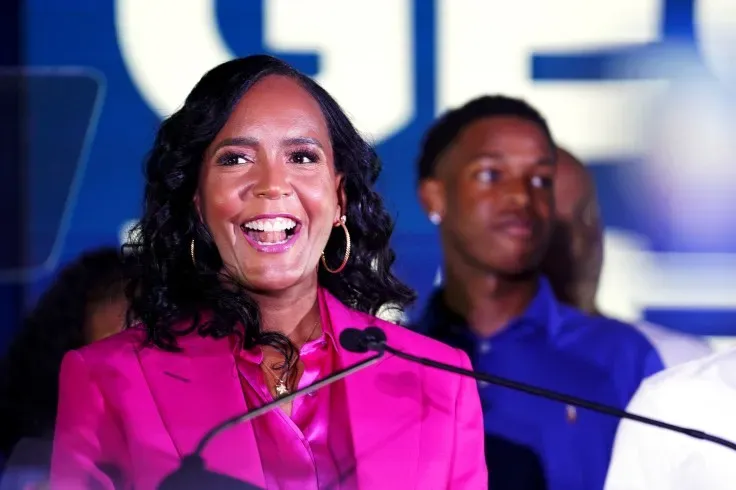
Keisha Lance Bottoms of Georgia, who will become the first Black female governor in the nation. Previously a senior advisor within the Biden White House and mayor of Atlanta, Bottoms defeated uber-wealthy GOP businessman Rick Jackson by roughly 360,000 votes.
Democrats were reasonably worried about this race: polls showed a much closer race than the senatorial one that featured popular Sen. Jon Ossoff. Plus, Lance Bottoms overcame a major financial disadvantage since Jackson reportedly poured more than $220 million into his campaign account. Lance Bottoms raised roughly $13 million.
Lance Bottoms’ victory ended nearly three decades of Republican control in Georgia. Now, Democrats hold all eight statewide elected offices in the Peach State. Black female Democrats hold seven of those eight seats too. Lance Bottoms’ victory also provided an important step for Sens. Jon Ossoff and Raphael Warnock if they plan to run for president in 2028. If Jackson had won the gubernatorial race and Democrats nominated one of the two Georgia senators for president, Jackson would be tasked with appointing a new senator. Now, with Lance Bottoms in the governor’s mansion, Democrats do not have to worry about losing a Senate seat.
In Florida, Byron Donalds, who became the state’s first Black governor. A Republican and current congressman from the Naples area, Donalds defeated former Rep. David Jolly by roughly 100,000 votes. Donalds was the hand-picked choice of Trump, a new Florida resident. Jolly, a former congressman who served in the House as a Republican, ran on a moderate, pragmatic message. He, like many other Florida Democrats, narrowly lost to his Republican opponent. Donalds, a rising star within the Republican Party, is the nation’s first Black Republican governor.
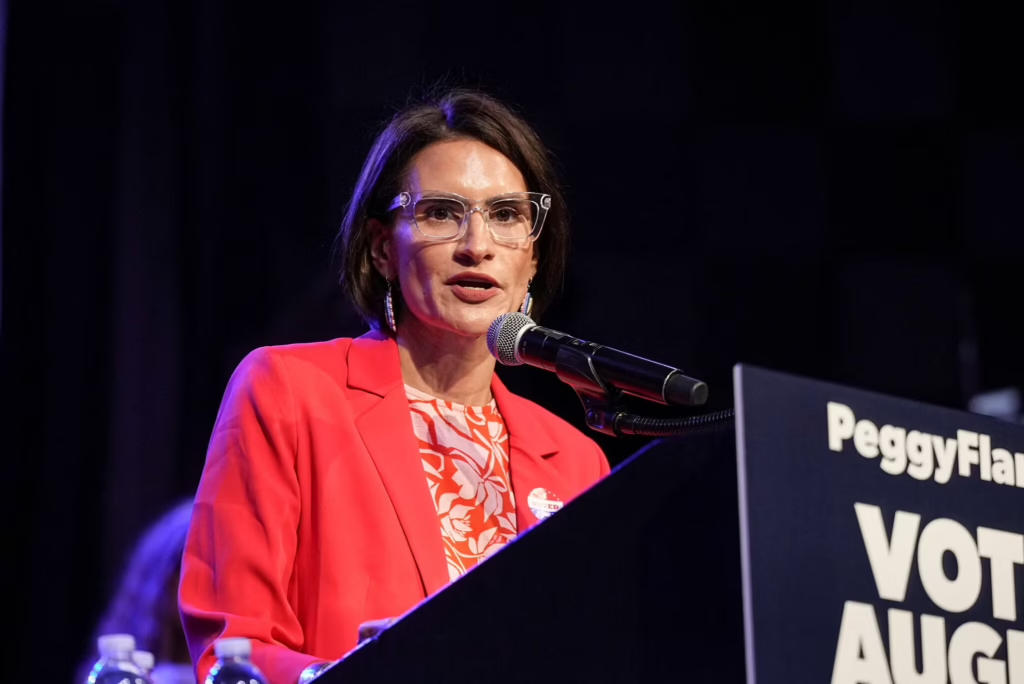
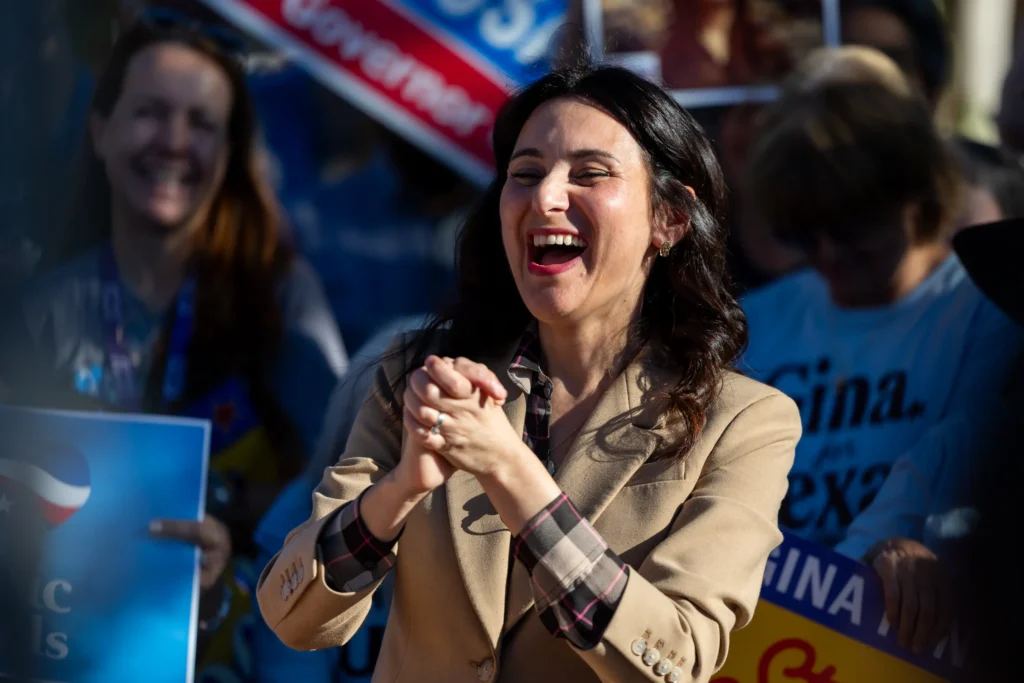
Photo credit: Tim Evans/Reuters
Peggy Flanagan of Minnesota, who will become the first Native American woman elected to the U.S. Senate. Currently Minnesota’s Democratic lieutenant governor, Flanagan is a member of the White Earth Band of Ojibwe, the largest recognized tribe in Minnesota. On November 3, she beat Michele Tafoya, a former NFL sideline reporter who national Republicans believed was one of their top recruits. In August, Flanagan beat more-moderate Rep. Angie Craig in a closely watched primary.
Unlike other races, Minnesota did not experience a sharp tack to the left Tuesday night. Some pundits tie this stagnation to the fraud scandal that plagued Tim Walz’s gubernatorial administration and other Democrats in the state. Nonetheless, the nation has its first female Native American senator in Flanagan, a young and outspoken progressive who is seeking to secure single-payer healthcare and universal childcare.
Democrat Deb Haaland who, similar to Flanagan, became the nation’s first Native American female governor. A member of the Laguna Pueblo, Haaland defeated Republican Gregg Hull by roughly 14 percentage points. In 2018, Haaland made history as one of the first of two Native American women elected to Congress. She later made history again in 2021, by becoming the first Native American to serve in the Cabinet as interior secretary under president Joe Biden. Now, she will bring her experience from Capitol Hill and the White House back home to lead New Mexico.
Chris Pappas, who became the first openly gay man elected to the U.S. Senate. Pappas beat former Sen. John Sununu, a member of a New Hampshire political dynasty family. Pappas previously served in the House, representing one of two Granite State congressional districts. Prior to serving in Congress, Pappas served on the New Hampshire Executive Council, a unique statewide body tasked with advising the governor, as a local county treasurer, and member of the state House.
Notably, Pappas’ grandfather invented the chicken tender in a Manchester restaurant. Pappas becomes not only the first openly gay senator, but also the first senator who is the grandson of an inventor of a modern American culinary staple.
Photo credit: Michael Minasi/KUT News
In Texas, Gina Hinojosa became the first Latina governor of Texas. Hinojosa’s victory in Texas is part of a massive blue wave that swung through the Lone Star State. Hinojosa defeated GOP Gov. Greg Abbott, a longtime fixture in Texas politics who was seeking a fourth term in office. Republicans have controlled the governorship—and countless other statewide elected offices—in Texas for more than three decades. Hinojosa’s win is a sign of a seismic shift among Latino voters in support of Democrats. In some areas of the Rio Grande Valley, Latino voters shifted 57 points to the left in support of Hinojosa (and other Democrats such as Talarico).
Hinojosa capitalized on both widespread discontent with national Republicans and statewide officials like Abbott over public school funding and school choice issues. Hinojosa will become the first Democrat to lead the state since Ann Richards left office in 1995, marking a pivotal new chapter in Texas politics.
In Michigan, Abdul El-Sayed became the first Muslim American elected to the Senate after besting Republican candidate Mike Rogers by more than 340,000 votes. El-Sayed, a physician and former Detroit Health Department director, faced relentless attacks from figures on both the left and right due to his Muslim faith and background. El-Sayed emerged from a closely watched, excessively competitive primary that featured Rep. Haley Stevens. El-Sayed narrowly beat Stevens in August, prompting the congresswoman to endorse him shortly thereafter. In November, Stevens shocked pundits by rescinding her endorsement of El-Sayed and instead opted to support Rogers.
El-Sayed’s win marked a major win for the lefty movement. The public health official campaigned on unabashedly progressive principles including single-payer healthcare. Because of the national attraction it drew, this race was the nation’s most watched contest. The telegenic El-Sayed will now represent Michigan for at least the next six years, with a bright future ahead of him.
Finally, Scott Colom in Mississippi. In what might be the largest upset, prosecutor Scott Colom edged out a narrow victory over incumbent GOP Sen. Cindy Hyde-Smith in Mississippi’s Senate race. Colom is the first Black senator to represent Mississippi since Reconstruction.
Colom ran a whip-smart, under-the-radar campaign that portrayed Hyde-Smith, a historic electoral underperformer, as out-of-touch. Harnessing historic Black voter energy and turnout in the wake of the Callais decision, Colom delivered a remarkable feat that illustrates the reach of this massive blue wave.