
Why both backlash and support of data centers is warranted
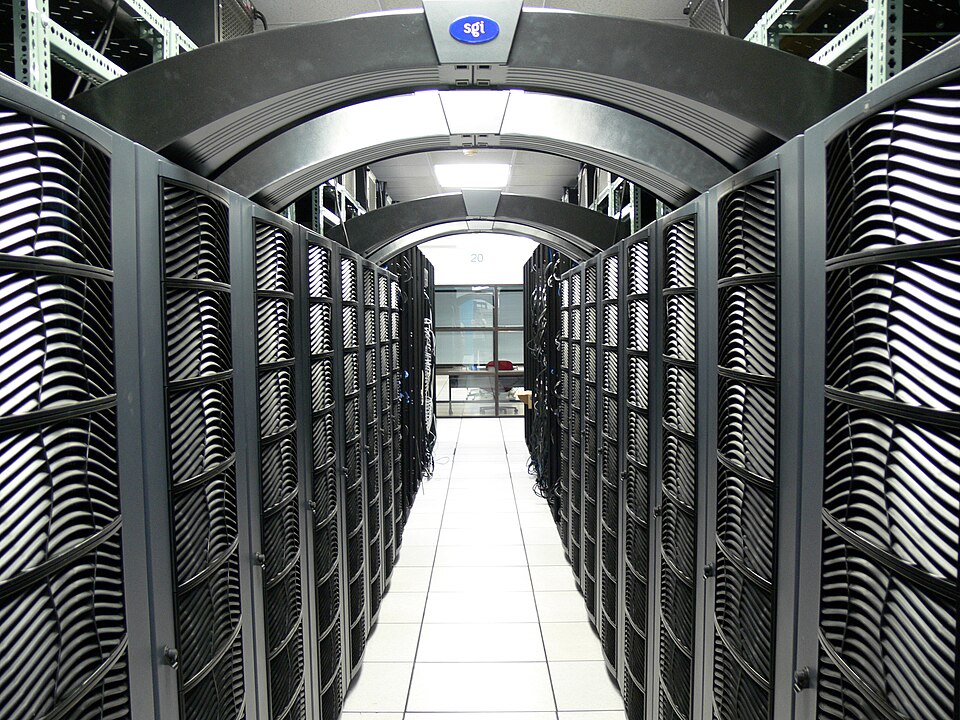
It is safe to say that artificial intelligence has quickly become one of, if not the, biggest issue modern society faces. Over the past two years, political discussion of this issue has surged, both scaring and inspiring millions of people. But there are many complex issues beneath the surface and beyond the classic “Will it take over the world?” question. Recently, AI discussion has branched off into examining the facilities that support, run, and maintain all of America’s AI: data centers. Although these facilities provide the computing to advance America’s AI development, they threaten the country’s communities and resources. This raises the question: Are they worth building?
Yes, data centers are worth building. It would be too harsh to pause all data center constructions and halt the projects already in place. These facilities are invaluable. They support the unprecedented AI growth that America hopes will completely revolutionize almost every aspect of our lives. But, there are many conditions that need to be satisfied in order for these data centers to be built responsibly and productively. Overall, AI data center construction needs: more regulation and oversight from politicians, more agreement between developers and local communities, full financial and environmental responsibility from the companies building them, and more strategic site locations.
With data centers, the largest area of concern is their potential adverse impact on local communities. According to a Pew Research Center survey conducted this past summer, 60 percent of American adults say they would be “not too or at all comfortable” with a new data center near them, while 19 percent say they would be “somewhat comfortable.” Only 7 percent responded “very comfortable.” These nearby residents have every reason to be skeptical of data centers. They are rightfully concerned with noise and air pollution, rising electricity bills, and the lack of permanent employment. To tackle this, corporations should explore building in more remote places and agree to cover the full costs.
If companies, however, are dead set on building in less-remote places, they must work cooperatively with communities and governments to find a way to address local concerns. Too often, companies pursue massive projects unbeknownst to the communities that must live beside them. After all, while private companies such as OpenAI and Meta are building the keys to America’s computing success, their projects can take a heavy toll on the communities that lack access to that success. The companies that build data centers are the only ones to reap their benefits. Therefore, federal and state governments must support those in communities that host data centers by tightly overseeing every current and future project.
Many are aware of data centers’ environmental impacts, particularly the resources they consume. Beyond their insatiable thirst and profound water consumption, data centers require enormous amounts of electricity to simply operate, increasing the demand for power generation (and potentially greenhouse gas emissions) in their area. According to the Department of Energy, data centers accounted for roughly 4.4% of all energy consumption in 2023, and will likely grow to a projected 6.7% or 12% by 2028. While very few data centers have their own direct power sources, the vast majority receive their energy from public electrical grids, raising prices for everyday Americans.
Many vocal supporters of data centers, particularly President Donald Trump, believe Big AI companies should enjoy free reign in regards to server construction. Trump argued that America cannot slow down the building of data centers due to competition with China. While competition with China is a legitimate concern, it is not an excuse for pursuing a data center project without proper oversight and accountability. If anything, this competition should push America in the direction of sustainable infrastructure and increased political involvement, instead of building as fast as humanely possible. America can win the AI race, but it cannot come at the expense of our own neighbors.
Ultimately, data centers will play a major role in the technological future of the United States. Because of that, we should not regularly pause data center construction. The government, however, must lay its fist down and sensibly regulate these massive facilities. Local communities must greenlight these facilities too. And for the projects currently under construction, they should continue, but only with enhanced safety protocols, complete financial responsibility, and regular local community feedback. Through stronger oversight, community involvement, and ensuring companies cover the full tab, America can safely advance AI development in the right direction. Progress and innovation should receive applause—but responsible construction should too.