
DC voters: Do not rank Oye Owolewa for DC Council at-large
Beware the candidate who is an expert at shaking hands. While it is terrific to have social grace in one-on-one encounters, it is not enough for a politician to glad-hand their way into office. I watched one try last spring, and this November, voters will decide if it worked.
In May, I attended a Ward 7 candidate forum that featured the nine Democratic candidates vying to replace retiring incumbent Anita Bonds as an at-large member of the Council. Behind a row of plastic folding tables in a dimly lit charter school gym, candidates traded quips, exchanged barbs, and landed jabs. But one candidate’s performance was particularly memorable.
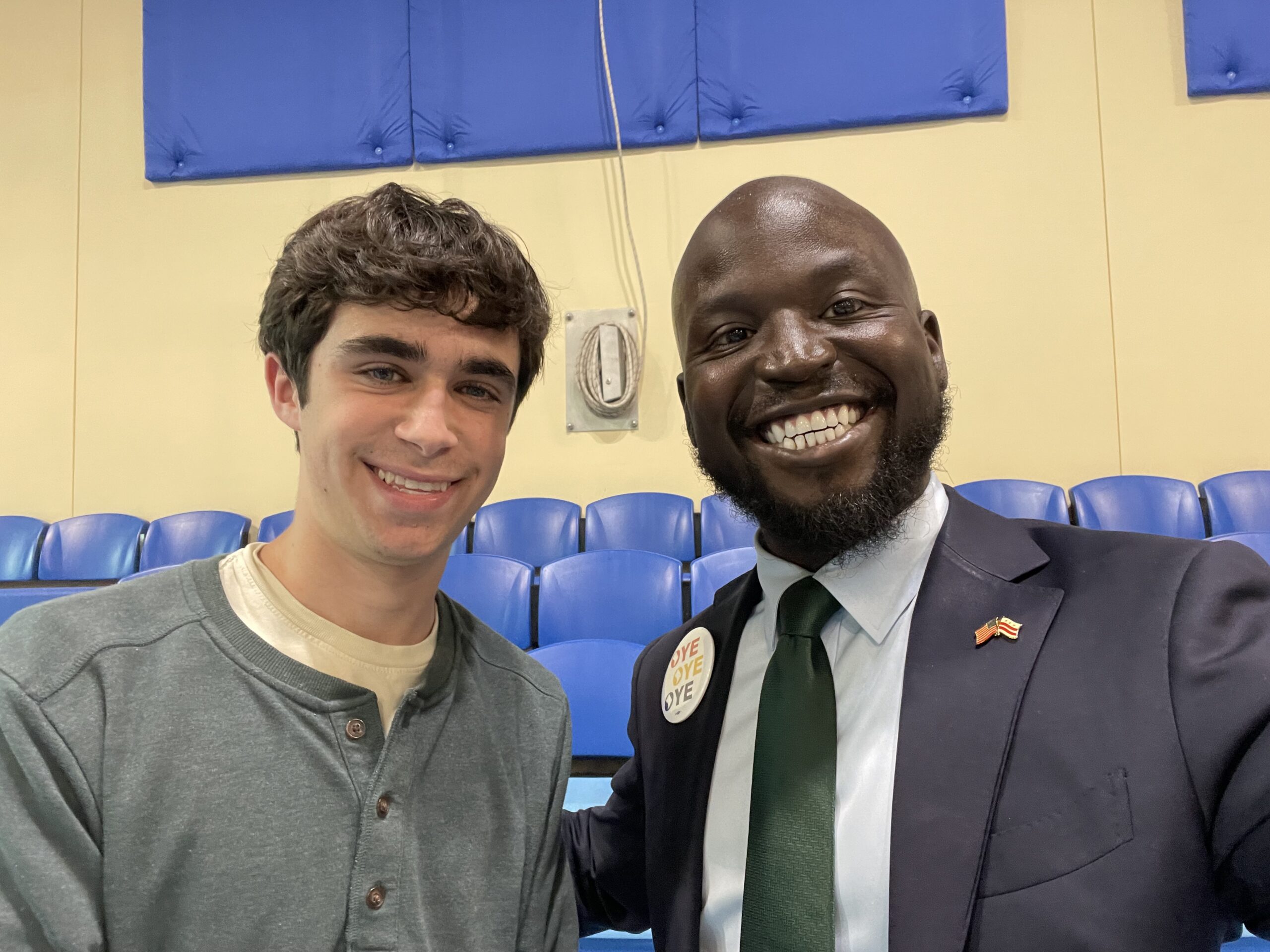
When Oye Owolewa arrived at St. Coletta’s public charter school in the city’s Hill East neighborhood for the at-large candidate forum, he spent his first five minutes working the room and introducing himself to each attendee. But Owolewa is not a stranger to District voters. Since 2021, the Congress Heights pharmacist has served as the city’s shadow congressperson, an unpaid elected position whose sole job is to advance the fight for statehood. As he shook hands and engaged with the people in the room, it was hard not to like him. But the city has significant challenges: an impending fiscal shortfall, rents that continue to climb, and federal layoffs that have thinned both the tax base and job market. Therefore, the city needs more than someone who is good at mingling a crowd and speaking in vague ways about the regrettably improbable abstraction of statehood. It needs someone who can solve the serious problems we have right here, right now.
At the forum, those aspiring to office in the city were asked a series of questions. They largely involved three topics: affordability, the budget, and public safety. These are all vital issues that affect the day-to-day life of residents across the District. Since the Hill East forum, Owolewa has bested that field of eight fellow Democrats over eight rounds of ranked-choice voting to win the primary. And in the weeks since the contentious primary, the issue of affordability—and specifically the cost and production of housing—has taken center stage in the general election.
At a September general election debate hosted by the city’s campaign finance agency, candidates were pressed on their plans to lower the cost of housing in the District. Candidates like Republican Darrell Green and Independent incumbent Elissa Silverman, who are both running alongside Owolewa for one of two at-large seats on the ballot this November, argued that easing restrictions and increasing supply will lower the city’s astronomical rents. Owolewa disagreed. “There’s a myth out there that if you build more housing, then the price of housing will go down,” he said.
This is a very striking thing to say, especially when evidence points the other way. Consider Minnesota’s Twin Cities where St. Paul voters approved strict rent control. Its twin to its west, Minneapolis, chose to instead flatten its zoning laws and loosen permitting restrictions. St. Paul has since largely shelved its rent control ordinance; Minneapolis, meanwhile, has grown its housing stock tremendously and watched as rents only rose by one percentage point.
In an interview with The Washington Informer, Owolewa promised to expand rent control efforts in the District, a move that would further erode developer confidence in our recession-bound city. For now, the District’s need is simple: more units. The only way to deliver more units in the city is to take the Minneapolis approach by flattening zoning restrictions, loosening permitting rules, and letting builders build.
It is worth mentioning, however, that Owolewa’s not-in-my-backyard housing platform is largely an anomaly in a city whose left-wing is buoyed primarily by yes-in-my-backyard approaches to building housing. Presumptive mayor and fellow democratic socialist Janeese Lewis George is promising to build a lofty 72,000 new units across the District. In Ward 1, the stretch of midcity neighborhoods clearly angling to become Washington’s ‘Commie Corridor,’ soon-to-be-councilmember Aparna Raj campaigned on the premise that increasing the supply of housing is crucial to bringing down rents. Even Silverman, the aforementioned Independent councilmember who earned a reputation as a fiery thorn in the side of moderate mayor Muriel Bowser, boasts an impressive record on land use reform.
With the city bracing for a possible economic downfall, it has become abundantly clear District residents deserve pro-growth leaders in the Wilson Building. I hesitate against endorsing a candidate in this race, but I will admit I am cautiously optimistic about Elissa Silverman and her candidacy. Although I supported her opponent incumbent Doni Crawford in the June special election, I believe Silverman is the best choice for District voters. Silverman previously served on the dais for eight years, making her name as an aggressive watchdog for taxpayers. She made too many enemies and was deservedly ousted by Kenyan McDuffie in 2022, but she has told numerous news outlets she has learned her lesson and is returning to the Council with an open mind and a willingness to build coalitions. And on the topic of housing, she is not a perfect YIMBY, but she understands that the city must increase supply to lower rents.
With the election being decided by ranked-choice voting (which in of itself is another controversy), voters should leave Owolewa’s box empty. A politician needs to do more than just work the room. They need the skills to work out the real problems of their constituents and address the challenges in their community.